

PLANO · DALLAS · FORT WORTH · FRISCO · MCKINNEY · ALLEN
Chimney Cleaning in Plano, TX
Before the first fire of the season, someone should look up the flue. We inspect it, photograph what is there, and tell you whether it needs sweeping or not — at no charge either way.
Book a free inspectionSweeping is half of it. The inspection is the other half.
Sweeping clears creosote and debris out of the flue. The inspection is what tells you whether the chimney is safe to light — whether the liner is intact, the flue is clear end to end, the damper works, and the firebox and mortar are sound. One without the other is not worth much. We photograph the flue and firebox before and after, so you can see what was cleared rather than take our word for it.
Which inspection you actually need
NFPA 211 defines three levels. A Level 1 covers the readily accessible parts and is what most homes need year to year. A Level 2 is the one required when a property changes hands, when the fuel type changes, or after a chimney fire or a storm — it adds the attic and crawl space and usually a camera run inside the flue. A Level 3 opens up concealed areas and is only for investigating a hazard the first two have already flagged. If you are buying or selling, you need a Level 2, and plenty of quotes you will get are for a Level 1. If you are buying or selling, tell us when you book and we will tell you up front which level of inspection we can carry out for you.
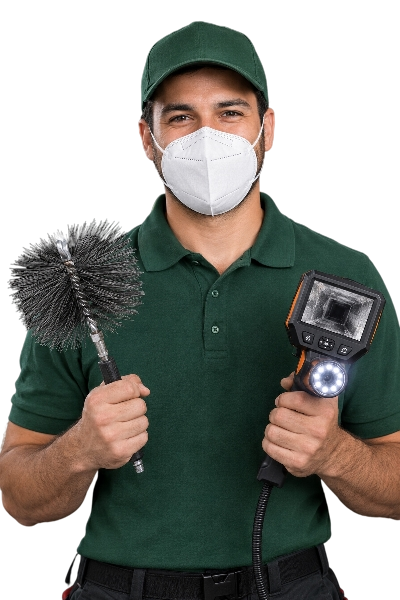
When To Call Us
6 signs your chimney needs attention before the next fire
An annual inspection is the standard recommendation, and unlike some home services that one is worth following — a flue you cannot see into is the whole problem. But some signs mean do not wait for the annual. If any of these describe your fireplace, have it looked at before you light it again.
Smoke coming back into the room
A fire that will not draw properly means the flue is restricted, the damper is not opening fully, or something is blocking the top. Smoke in the room also means combustion gases in the room.
Black, flaky or tarry buildup
Creosote. Shine a torch up past the damper — if the surfaces are coated rather than sooty, it has gone past the stage where a brush alone will shift it easily.
A strong smell in warm weather
Creosote in a damp flue smells worse in summer humidity than in winter. If the fireplace smells in July, there is more up there than last winter’s ash.
Debris in the firebox
Twigs, leaves, nesting material or bits of mortar on the hearth mean either an animal has got in or the chimney is shedding from the inside. Both need looking at before a fire.
You have just bought the house
You have no idea when it was last swept or whether the liner is sound. This is also the case where NFPA 211 calls for a Level 2 inspection rather than the Level 1 most quotes cover.
It has not been used in years
A disused chimney is the most likely to have a nest, a collapsed liner or a blocked cap — and the most likely to be lit on the first genuinely cold night without anyone checking.
Not sure what you are looking at? Book the inspection — it costs nothing either way.
Book a free inspectionYou see what we saw up there
A chimney is the one part of a house nobody ever looks at, which is why “it has been swept” is usually where the conversation ends. Every job we do ends with photographs of the flue, the liner, the damper and the firebox, and a written note of their condition — so you know what you are lighting a fire inside.
Photographed, not described
The flue and firebox before and after, and anything we found that you should know about.
Condition, written down
Liner, damper, cap, mortar and firebox, each noted. If something needs a mason or a specialist rather than a sweep, it is in the report and we say so.
No decision in the hallway
You get the report and the quote in writing, and you decide in your own time. Nothing is booked while we are standing in your home.
Common questions
Inspected every year, swept when the inspection says so. Creosote builds at different rates depending on what you burn, how dry it is, and how often you use the fireplace — an open fire burned most weekends through winter needs sweeping far more often than one lit twice at Christmas.
A Level 1 covers the readily accessible parts of the chimney and venting system and is what most homes need year to year. A Level 2 adds the attic, crawl space and usually a camera run inside the flue, and NFPA 211 calls for it when a property is sold or transferred, when the fuel type or appliance changes, or after a chimney fire or storm damage. If you are in the middle of a sale, a Level 1 quote is not what you need.
Tell us what you have when you book — a wood-burning fireplace, a gas log set or a factory-built firebox — and we will confirm before the visit whether it is one we work on. If it is not, we will say so rather than send someone out.
A sweep of the flue end to end, and a check of the firebox, damper, smoke chamber, liner and cap. Plus photographs of the flue, liner, damper and firebox, and a written report of their condition, which is yours to keep whether or not you book any work.
It depends on the chimney, how long it has been since it was last swept, and what the inspection finds. We give you a time estimate when we book the visit.
The report names what needs doing and who it needs. If something calls for a mason or a chimney specialist rather than a sweep, it says so, in writing, so you can take it to whoever you choose.
